Miranda Maverick on Training, Discipline, and Competing for the Long Run
Everybody wants to know how a professional trains. Fewer people ask what it takes to still be doing it in ten years.
Caleb Baers sat down with Miranda Maverick to ask both. The conversation runs long and covers ground most athlete interviews skip.
What they covered
How she actually structures her training
Miranda walks through her methodology, including how she decides what a given session is for before she steps on the mat. Most of it is less dramatic than people expect. That is the point.
Where mental discipline gets built
Discipline does not show up on the days you feel good. Miranda talks about building it in the ordinary weeks, when nothing about the work is interesting and nobody is watching.
The health investments she treats as non-negotiable
This is the section worth sitting through. A long career in combat sports runs on the maintenance nobody films: recovery, sleep, and taking care of your skin after every session. Miranda is direct about what she spends time and money on, and why.
Why we made this
Kimura Soap Co. was built around one moment in the training day. The shower after class. Christian Simmerling started carrying his own soap to the academy in 2018 because he did not trust what was in the dispenser, and Kimura came out of that.
Conversations like this one are the same idea from a different angle. The athletes who last are the ones who take the unglamorous part seriously.
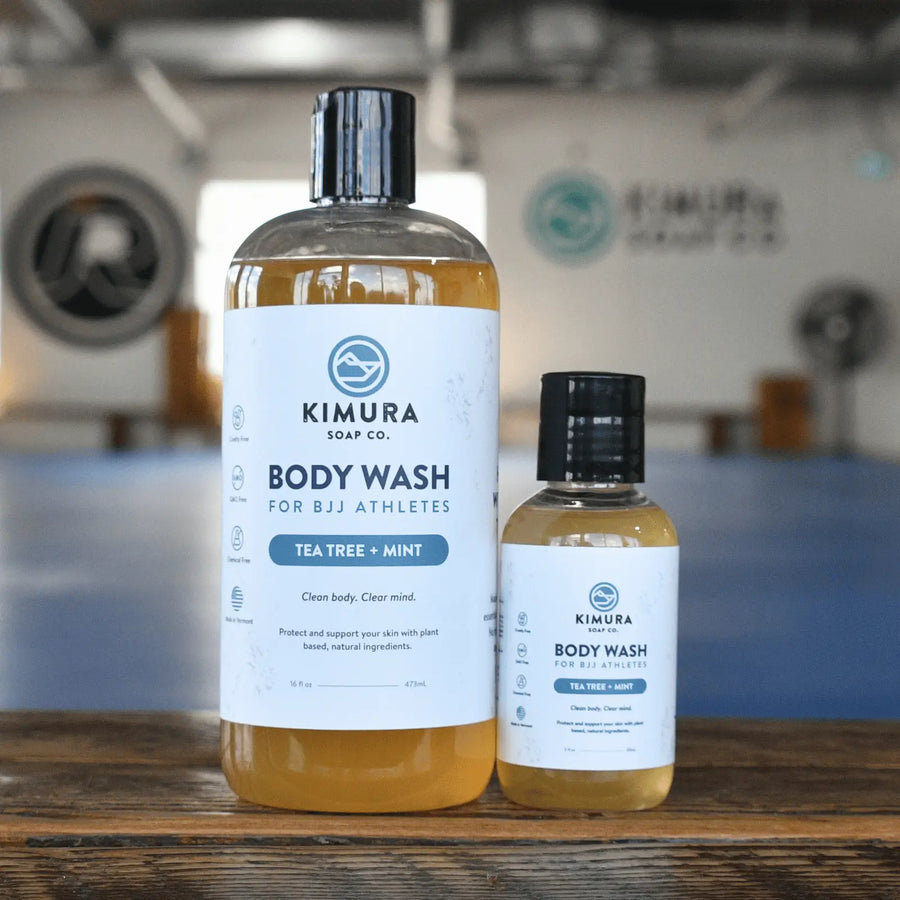
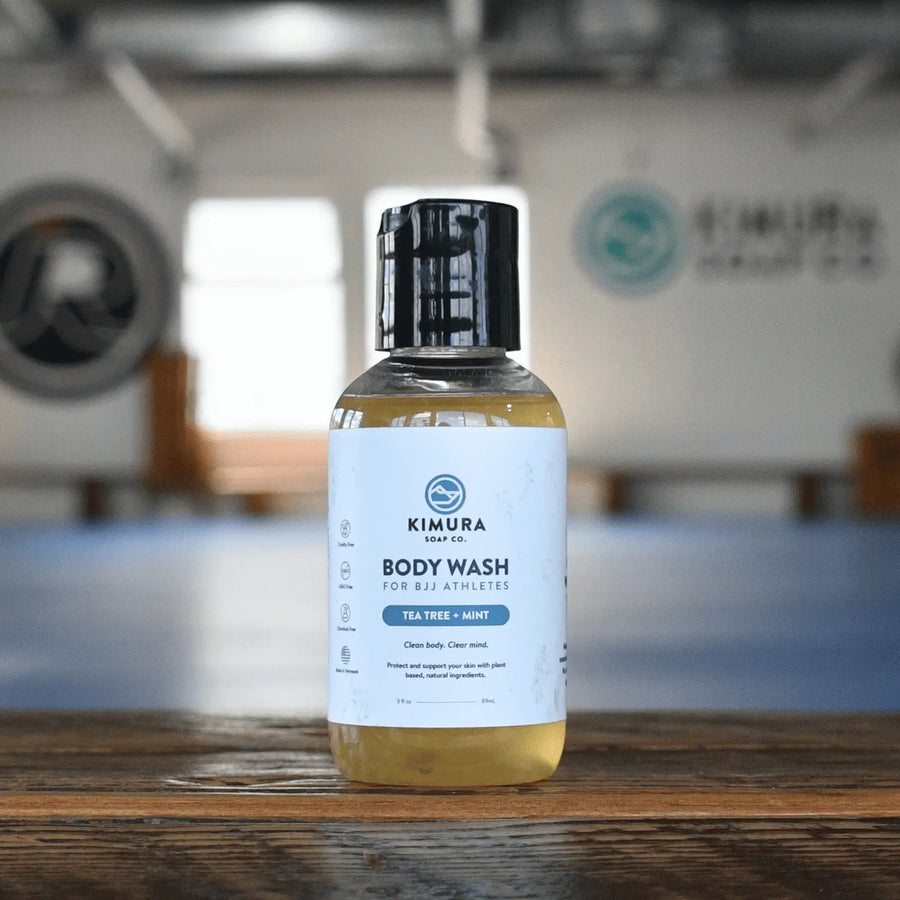
Kimura is a plant-based, head-to-toe body wash made for Brazilian Jiu-Jitsu athletes. Handmade in Vermont in small batches, certified to USDA Organic Standards by VOF, with the full ingredient list printed on every bottle.
Read the ingredient list, then decide. Shop the 16 oz + 3 oz combo →
Transcript
0:00 CB: All right, perfect. Yeah, nice to meet you, Miranda. Um, yeah, I really appreciate you uh coming on to just uh talk a little bit and um I was hoping to get some uh I've got some questions regarding like mindset around fighting and competing and whatnot um that I'd love to get your opinion on. To start real quick — quick introduction.
0:22 CB: Miranda Maverick. Um, a UFC record of 17 and six. And, uh, yeah. Anything you want to add to that?
0:30 MM: Uh, not really. I'm currently ranked. You guys want to go check out the UFC 6 video game? I'm pretty excited to be in that now as well. So, that's been probably the big highlight of the month.
0:40 CB: That's sick. That's super cool. And you also have a master's degree in psychology.
0:44 MM: Hey, I do. Industrial psychology with a focus in data analytics.
0:49 CB: Wow, that's crazy. Does that psychology background — that's probably played a large role in your fight career as well?
0:58 MM: Hey, you know, I don't really know. I mean, I think I've always been interested in human psychology and being able to kind of understand people's minds. I think if anything, it's kind of helped strengthen mine knowing that a lot of our thoughts and feelings are just reactions, you know, instead of getting into my feelings. I've been a very logical person my entire life. And maybe the degree helped me with that a little bit, but I would almost say the other way around. You know, the fight game really helps you with toughness and being able to endure a lot. And uh grad school is not the easiest thing for me, especially while I was still fighting and working full-time as I went through it all.
1:31 CB: Yeah, that's crazy. That's uh super impressive as well. A well accomplished woman for sure.
1:35 MM: Appreciate it.
1:37 CB: All right. Yeah, we'll get into the questions here. Uh, question number one: why did you start training?
1:42 MM: Um, well, jiu-jitsu I started training because I just loved it. My dad had always uh wrestled around with us at home and we would watch the UFC, pause it, and like actually learn moves. We weren't just like goofing around. I knew how to armbar people and choke and all that kind of stuff and the basics before I went and formally trained. And then when I turned 16, I came to him and I was like, you know, Dad, I would really like to go formally train at a gym. And we lived about an hour and 15 minutes away from the closest gym, which was in Springfield, Missouri. And he was like, "All right, if you can find a way to pay for it, I fully support you." You know, cuz I was like, I want to do something practical that I can know how to defend myself for college, etc.
2:22 MM: And I started going to that gym and within two weeks, I was like, you know what, I want to compete. And um I fell in love with it. I don't know how else to say it. You know, I started grappling with men that were way bigger than me and doing very well as a 16-year-old female. And my first competition in the state of Missouri, they didn't have hardly any females, right? So, I did the juvenile division, which was under 18. I did the women's division, which had two other people in it, I think, and I did the men's division all at the same time. And I ended up placing third in the men's division at 16 years old. And I was like, "Okay, I think I'm going to try to go make something out of this."
2:54 MM: And then my coaches were very encouraging after that and they were like, "You should try fighting, you know, when you turn 18." And I was like, "No, I don't really want punched in the face, you know." And they were like, "Well, you never know. I think you'd have a good future in it." And I eventually convinced myself that I'd give it a try, and if I won and I liked it, I'd go be the best I could be. And I won.
3:18 CB: So that's incredible. That's incredible. So safe to say you were hooked from day one pretty much.
3:25 MM: Oh, yeah. I love jiu-jitsu. I always tell people, you know, if I hear about them saying like, I wanted to get my grandkid in this or my child in this, I'm like, jiu-jitsu — it's the only one uh that I think is practical, especially for females. Um, like anytime there's self-defense courses and they're not on the ground, I'm like, well, you just wasted your time, you know? So, uh, yeah, huge advocate, huge fan, and obviously love it in general.
3:47 CB: That's super cool. That's super cool. Yeah. Um, question number two: how much of winning in the UFC happens before you step into the cage?
3:57 MM: Um, I would say 95% of it. You know, obviously there's the — you have to show up and do it and fight through the adrenaline aspect of it. There's a lot of fighters out there that train very well and just don't perform as well in the octagon. So, there's definitely an aspect once you step in there, but a lot of it's through training camp. You know, it's have you prepared for this opponent correctly? Have you been showing up and training every day? Have you been dieting and getting your nutrition on point to where you can go, you know, three, five rounds as hard as you can, as hard as you want? Um, and have you prepared for the worst case scenarios? You know, cuz of course we have a game plan when we go in there, but all it takes is getting rocked once or getting stuck in a submission you didn't expect to, or, you know, not winning as easily, etc., etc. Um, so yeah, I'd say like 95% for sure beforehand. Not to mention the weight cut. You know, that's a whole another fight in itself before you step into that octagon. If it goes well, usually you're on a good roll.
4:51 CB: There you go. There you go. Um, and then yeah, with that, uh, would you say that fighting is a job where it's a lifestyle, or is fighting, you know, a training camp?
5:06 MM: No. 100%. And if you're just doing a training camp, then you're going to end up — I consider it like you're preparing yourself to get hurt. Like actually hurt. You know, this isn't basketball. This isn't baseball. This isn't like, oh, my team won, oh, my team lost. You know, you just gave yourself a broken orbital or you broke your arm or, you know, whatever happened, or you lost a fight and got your butt kicked, or you ruined the trajectory of your future by losing a fight, you know. And at the end of the day, that's a lot of pressure to have every time you go into a fight, but it's just the truth of it.
5:36 MM: I've always said, like, if I have an M&M during camp, I'm like, well, that could have ruined it. Now I might lose a fight, you know? And of course, there's a balance to that, right? I use the M&M one as a joke because I love M&M's and I usually literally have like one M&M a day. It's like my weird thing that I do. Um, but I'm like, all it takes is like not being balanced out right, not having the right mental aspect, and then you go into a fight and you lose your future potentially — especially if you're not already in the UFC. You know, you're working your way up. For men especially, it's even harder. Like if you don't have a perfect record, you don't have the right connections, all this stuff, you may never get there.
6:14 CB: Yeah, there's worse vices to have than M&M's. I could be good. Um, all right, perfect. Yeah. Uh, question number four — um, or sorry, number three. This will be one I want to hear your opinion on. What's the difference between confidence and ego in fighting?
6:30 MM: Oh man. Um, you know, I think that they do play into each other. You know, you go back to that psychology aspect. At the end of the day, it's like saying you're a narcissist for taking care of yourself. You know, it's like you have to have ego to be confident and you have to be confident to have an ego in some aspect or another. However, there's like the confidence to where you're like, I know what's at stake, I know the risk, and I know the respectfulness of the sport. Like, you should always go in knowing anything could happen. You should always go in respecting your opponent in some degree. Even if you don't respect them as people — which I've had that kind of opponent before — you should respect their skills and what they bring to the sport and what they bring to you, which is basically a way to make a living by fighting this other person, right?
7:10 MM: Um, where ego is just like, I'm going to go in there. Usually, ego is not always tied to discipline, where confidence is often tied to discipline and having worked your way to that point. Where ego, you know, you have the big guys that walk into a gym going, I can fight anybody, I'm a big dude, and then they go against say me, get their butt kicked, and they never walk back into a gym again and go back out and tell their friends how tough they are. And it's like, then you have the people who walk into the gym, get their butt kicked, and go, wow, I didn't know this was a thing, I guess I don't know how to fight, you know. And then they learn and they grow their confidence and they truly have that ability. And I think confidence is more rooted in truth and reality, whereas ego can be rooted in a false reality.
7:55 CB: That's super insightful. Um, so with that, what would be some advice you have for somebody who is struggling to find that balance between the two?
8:04 MM: Yeah. I mean, train. Get it to where the reality is what it is. You know, you get in there and you find people who beat you, you find people who you can beat, and you find a partner that's on the same level. And if you're getting ready for a fight camp or jiu-jitsu training camp, say for worlds or something, you should never just be beating up every opponent you have. You should always have someone who really humbles you and keeps you on your toes. And then you should have somebody where it's like, ah, they won that round, I won last round. You know, I think it's always important to have those three training partners. And if you're lacking any one of them, I think it absolutely can hurt your confidence, or it creates that ego that makes confidence worthless because it's not real.
8:44 CB: That's — yeah, that's super good. That's super good. You often uh don't hear people um mention that they need to also be building their confidence. So that's cool to hear you talk about that as well.
8:54 MM: Yeah, for sure. You know — sorry, just another note on that. I hear about people who it's like, "Yeah, I went and trained with so and so and then they didn't want to train with me anymore because I beat him on the ground or I beat him at standup." And I'm like, it's just bewildering to me when that happens. I know it happens in all kinds of MMA gyms all the time. You see it everywhere. Um, I think girls are some of the worst with that because we're so used to being the only girl in the gym or the best girl at my level. And it's like when you come across someone that's better than you in even one aspect, it's like, "Oh, who do you think you are?" You know, like this is my territory kind of thing. And I think it really hurts them if they don't allow that to happen. Like I want people in there to be able to hang with me or even beat me in some areas, or I know I'm never going to be able to level up. And if I go against men who just beat me all the time, I always have that in the back of my mind, you know. And that's just the truth of it. Like I'm like, well, you know, they beat me, but I don't know if it was like fair beating me, or if they're just bigger and stronger, or they're just a man, you know. Like, it is what it is, right?
9:53 CB: Going back to what you said with um with women sometimes having that trouble with meeting other women who might be better than them in a certain field — um, what would be your advice for somebody who has attached their personality solely around their skills in combat sports of some kind?
10:12 MM: Yeah, I actually just got done making a post about this, about how fighting for me — I don't know, probably five years ago is when that big switch happened for me. Like right towards the beginning of when I was getting in the UFC and I was like, fight, that's all I want to do. That's my end goal. Yes, I have my plan B, but this is my priority. It's my only priority. Everything else can take a back burner.
10:33 MM: And then when I found out both my retinas were torn, like the day before my UFC debut, it was like the worst day of my life, right? And I was just absolutely heartbroken. Uh, my dreams were shattered. You know, I had like three surgeons that told me I'd never fight again, that it'd be hard to have a child because of the pressure on my eyes and being so young. Like all these things that were just like all of my life aspirations, that I was like, what? Like, I felt like almost suicidal, you know. And at the time it was like two weeks before I had met my current husband — so it was kind of wild, or two weeks after, I should say. So we had just started dating, like had two dates when this all happened. And so not only did I get the call from the UFC — exciting, exciting — but then I had this terrible heartbreak of, and your retinas are torn, you'll never fight again. And he hung through it all, which is kind of our origin story, I guess you'd say, of how we got together.
11:25 MM: But going back to it, I think that ended my ego, you know, because I was like, I have to find something else. Fighting can't be everything for me, you know. And it isn't everything. And I had to just kind of be slapped across the face that it wasn't. And I'm a big believer. I think that God uh tried to nudge me maybe, and maybe I wasn't listening, so he just flattened me, you know.
11:50 MM: And my dad was kind of the one that talked to me, and he was like, "Look, I don't love you any less. Nobody in your family loves you or likes you any less because you'll never fight again." He's like, "I don't care if you go blind entirely. I'll be right there, you know, helping you find a way, describing every single tree and what it looks like," you know. And for me — sorry, I'm going to get emotional.
12:10 CB: No, no.
12:12 MM: It kind of hit home for me, you know. And I was like, wow, like I'm not just this, you know. I'm a daughter. Um, I'm a lot more things now than I was back then, but I was like, I'm a daughter. I'm a student. I'll always be a teacher. There will always be a fighter in life in some aspect. Like none of that will ever go away. And now I get to add onto that resume a wife, a mother, which is one of the most important to me, you know. And I'm still a teacher. I still teach, whether it's martial arts or uh analytics or my children different things to do. And I'll always be an athlete of some aspect. I'll always be a fighter, and I'll always be a competitor, you know. And um at the end of the day, a daughter of God, you know.
12:52 MM: And I think to take that out of that perspective of just being narrowed in on that one thing, it really helps that ego, cuz you're like, who cares? Like, this is this little bitty thing in my life. And not only that, this sport can't last your whole lifetime. I'm not going to fight people when I'm 50, you know? So it's like, okay, this is just like a blink, and no one else gives a — my kids aren't — they might grow up and be like, "My mom was a fighter, that's cool." But it's not like it's going to be their whole life, you know. And in 100 years, nobody's going to even remember my name. So why not make, you know, like advertise the grace of God, advertise the kindness, and whatever aspects in life you want to see live beyond your own legacy.
13:29 CB: That's really incredible. That's inspiring for sure. Yeah. I uh, on a little bit of a side note, I too was actually raised in a homeschool Baptist community, so I come from a faith background as well. I was talking to Roosevelt Sza uh earlier this morning doing an interview with him, and one of the things that he was talking about is in his preparation he's just trying to stay as present and in the moment leading up to tournaments as possible. And with that, I remember a comment my brother had made to me one time talking about how in the Hebrew they call God Yahweh, and Yahweh translates to "I am." You know, being present is being in God's likeness and being closer to God. So with that, what would you say your mental preparation is leading into competition where you're trying to get present? What does that process look like for you?
14:16 MM: Yeah, I mean, kind of connected to the faith aspect. I've always been uh anxious before competitions. I think everybody does, whether we try to act like it or not, you know. Um, I always say the more experience you have, the easier that gets, which is true. But at the end of the day, I always know whatever happens is going to happen. I've prepared as much as I can leading up to that, which you know is from your second question, where it's like do everything you can, have a balance to where mentally you're ready, you're confident, um and you've done everything that you know you could have done to prepare for this — let alone for, you know, two years later. You know, of course you can always gain experience, gain skills, but walk into that knowing you've done all you can. And just give your anxiety to God. Like, at the end of the 30 minutes of rolling or the 15 minutes of fighting, it's going to be over one way or another. It's not like you're going to be this anxious ball of goo for 10 days straight, you know? It's just a moment in time.
15:08 MM: And I try to tell myself — and my coaches kind of laugh at me every time — but we always have our group prayer. And I have a coach who's not even religious, but he still joins in on the prayer, which I respect and I appreciate. And my dad always does it if he's there. If he's not, I pull him up on the phone and he does it on the phone while I'm in the room. And usually other teams will join us, which is just an inspiring, amazing moment. You know, it's one of those times where whether you're five different languages in the room or not, you all kind of join together and just support each other and have that encouragement.
15:41 MM: And I hear people — or you see people in comments — our fans are kind of wild, right? You got the terrible fans, you got the very loyal fans, and you got the ones that love you or hate you the day after you fight, you know? And you have people like, "Why would you pray to God to beat up another human?" And it's like, that's not what the prayer is ever. The prayer is to keep everyone safe, to grant us the abilities he's already given us to show in those moments, and to thank and be grateful more than anything, you know, for the opportunity that we have and for the lifestyle we're allowed to have instead of, you know, working a 9 to 5, or um being injured and not able to show up to that fight.
16:16 MM: And so that aspect of it, like me being able to do that leading up to a fight and throughout camp — giving away that anxiety, giving away all those worries, and making sure that I have everything in my aspect that I can do. And then when something happens, I go, well, that was meant to happen. Like, I did everything I could, that person was better that day.
16:33 MM: Or for instance, my fight with Rose. I hurt my knee in the second round. I didn't have a prior injury. I didn't have anything wrong with that knee. We were prepared as heck for fight camp. I won the first round. I was doing well in the second round. And then it's like, boom, my ACL rips in half from a weird trip that should have never really hurt me, you know. And in my head I'm going, why did this have to happen then? And now I look back and go, what a blessing. I have a son now. Um, I would have never had that son at this point in time if it hadn't been for that injury. You know, I have a business going with my brother that never would have been able to be started because I wouldn't have had the time or effort or energy to put towards it. And I got to move back home with my family, which has been a dream of mine for the last 10 years. Um, so here we are.
17:23 MM: You know, um, I always said God doesn't have any stories of the Bible of people going to heaven walking a trail of flower petals. You know, it's always some kind of trial.
17:36 CB: That's super cool. That's super cool. I love how you've got such a good mindset too. Anytime uh you're good at controlling the story in a positive way for your life, you know — like all our story is, or life is, is what we tell ourselves. And absolutely, you find a really good way to process things.
17:52 MM: Thank you. Thank you.
17:54 CB: Yeah. Um, all right. Question number five. What is one piece of advice you wish someone had given to you before your first professional fight?
18:05 MM: Um, see, so many. But um — find a good team and find experienced people. Like, sometimes you have to invest in yourself before you get paid some money. And although I would go back and tell myself that, I don't know if I would have listened, because I was poor as dirt and I just would take — you know, I was like a grand for a fight.
18:27 MM: Yeah, and I lost way more money walking into the first, you know, three, five fights I had than I gained. You know, it was an investment for my future. And I think I would have told myself like, pay for a nutritionist, Miranda. Like, get out there, learn how to eat healthy, learn how to eat right. Cuz my healthy then was what I thought was healthy, you know? And then I found out what an idiot I was. And I was not surrounded by anyone who had ever cut weight correctly. And so I hurt myself multiple times, um, ended up like passing out in a tub, like having basically a seizure.
19:05 MM: Like, there's a reason I never cut to 115 again. I promised my dad I would never even try again, um, while anywhere near that walkaround weight. And it was all just ignorance. It was all just based around ignorance. Like eating a can of green beans a day, you know, and being like, that was only like 70 calories. And it's like, yes, and you just consumed freaking five tablespoons of salt. And it's like, "Oh, I didn't know sodium mattered," you know. Or put on the garbage bag and run for an hour, that's how we'll cut weight. And it's like, no, that's stupid. Like, it's one thing if you're cutting weight 10 minutes before a wrestling tournament and you need to lose a pound. It's another if you're going to be dehydrating yourself to the extent we are in MMA and you have 24 hours to recover, and instead you just murdered yourself when you're already down a weight, 15 pounds lighter than you'd usually be, you know?
19:53 MM: So just ignorance, and investing in myself um by knowledge, you know, paying people to actually learn what was needed, um whether that be for weight cutting, nutrition, etc. But I'd say most of them were for the weight cut and nutrition — and cross-training more.
20:08 MM: You know, everybody's so against cross-training. You'll find a lot of old school gyms are like, you went to someone else's gym, like how dare you. And it's like, look, if your gym doesn't encourage cross-training when you get to a certain level — especially if you're the only female in your gym and need other training partners — you need to find somewhere else.
20:26 CB: Yeah, that's a super good point. And at the end of the day, it's a service you're paying for. Like, they work for you, not vice versa.
20:33 MM: And I get the loyalty aspect, but at some point it becomes a cult, you know? Like, I'll represent and support my gym and be like, "Yeah, they're great for this and this." But you also have to be willing to let your members learn from other people, go to seminars, things like that. Which I want to be clear, um, my very first gym was not like that. The one I turned pro under was not like that. I would go and cross-train. There just weren't many opportunities in my area with females. But I've been to several gyms in between that have had that aspect and still do.
21:04 CB: Um, what you were talking about too with hiring a nutritionist and proper meal planning and all that stuff, and going back to a fighter being a 365-day-a-year job — how important is it for you that your food is organic? Uh, and your lifestyle in general is organic, including yourself?
21:22 MM: Yeah. Well, you know, organic — I guess people will take that very literally, and I find organic food to be absolute BS, so I could talk on that for a minute, I guess. But you know, I come from the ranching background and farming and all that.
21:34 CB: And we're in Alberta, so we hear you there.
21:37 MM: Yeah. Yeah. So, at the end of the day, organic is just nonsense. Like, it can be raised by minutes out there in the middle of a field and it's not organic because, you know, maybe pesticides were on a neighbor's, or maybe they sprayed water on — like whatever it is. And I'm like, whatever, I don't care as long as it's healthy, pure, raw food. And so I always just say unprocessed rather than organic, you know. Like, um, honey — I raise bees, I make pickles, that's one of my businesses — and I'm like, that stuff's not organic, but it is, you know. I'm just not going to pay for the big certificate. That's what people don't understand. It's a whole government game, the word organic. You know, it's like $2,000 an item to get something with a label organic on it.
22:20 MM: And I had that opportunity when I started out with my pickle business. And I was like, no. Like, no, I'm not doing that. I'm not going to go pay for what's already in it, you know. Like, this is the truth of it. I'm not going to go pay a certificate, you know? Um, so there — on that little rant. Sorry, didn't mean to do that.
22:36 MM: It is important not to have a bunch of processed foods in my system. Eat a bunch of whole foods. Make sure I'm filling up on the right stuff. But again, balance, right? I always have people, "What's your diet? You're so muscular, you're this." And I'm like, I balance. I still eat carbs. Like, I'm not over here eating the keto diet 24/7. And I've tried all of them, okay? I've done pescatarian. I've done vegetarian. I've even done vegan. Um, I've tried the carnivore diet — not with the raw meat, I won't do that, that's disgusting. But I've tried like meat only with very little of anything else.
23:08 MM: Keto was a good diet, but the issue with it is you look really good and then the second you eat a carb, you just kind of blow back up. And it's just because the fluid, the natural fluid we're supposed to have in our body to keep our organs and muscles going, you know? So at the end of the day, I just decided to have a nice balance of protein and carbs. Um, and then just cut sugars and make sure that your fats are limited but healthy fats. Like, when I go into fight week, I only eat protein and fats, and my fats almost equivalent to the protein, you know. And people are like, "What?" And I'm like, yeah, because my organs and stuff still need something to survive on, and even though it's not carbs, they get that storage from the fats.
23:45 MM: Um, and then let's see what else. The other balance aspect — I go out to eat sometimes. I'll eat a bar of ice cream or have a Halo Top, you know. Like, you can have snacks here and there, um, even like once every few days. It's not a big deal until you get down to like the last two weeks of camp, and then you really need to dial in. Um, now that's different for everyone. If your weight's an issue, if you don't stay fit and healthy and train, you know, three, four hours, six days a week, probably going to need to limit that a little bit more.
24:17 CB: There you go. There you go. Of course, there's always room for M&M's.
24:21 MM: Eh, yeah, always room for M&M's.
24:23 CB: There we go. I don't want to take up too much of your time, so I just got one more question. Do you prefer liquid or bar soap?
24:30 MM: Liquid.
24:31 CB: Here we go. Here we go.
24:34 MM: That's funny, because I was actually like, you know, I never asked if they were going to send me bar or liquid, and I'm like, I'll use both, but I definitely prefer liquid. That way if somebody else touches it or there's a hair on it, I don't get like grossed out and just want to like take a knife and shave off half the bar, you know?
24:50 CB: Exactly. There we go.
24:52 MM: Or like, I have my baby girl and she'll get in there and just chew on a bar and I'm like, "Oh, no." Like, don't do that.
24:57 CB: It's just like, it smells good, like I'm going to eat it
Share